To provide the best experiences, we use technologies like cookies to store and/or access device information. Consenting to these technologies will allow us to process data such as browsing behaviour or unique IDs on this site. Not consenting or withdrawing consent, may adversely affect certain features and functions.
The technical storage or access is strictly necessary for the legitimate purpose of enabling the use of a specific service explicitly requested by the subscriber or user, or for the sole purpose of carrying out the transmission of a communication over an electronic communications network.
The technical storage or access is necessary for the legitimate purpose of storing preferences that are not requested by the subscriber or user.
The technical storage or access that is used exclusively for statistical purposes.
The technical storage or access that is used exclusively for anonymous statistical purposes. Without a subpoena, voluntary compliance on the part of your Internet Service Provider, or additional records from a third party, information stored or retrieved for this purpose alone cannot usually be used to identify you.
The technical storage or access is required to create user profiles to send advertising, or to track the user on a website or across several websites for similar marketing purposes.
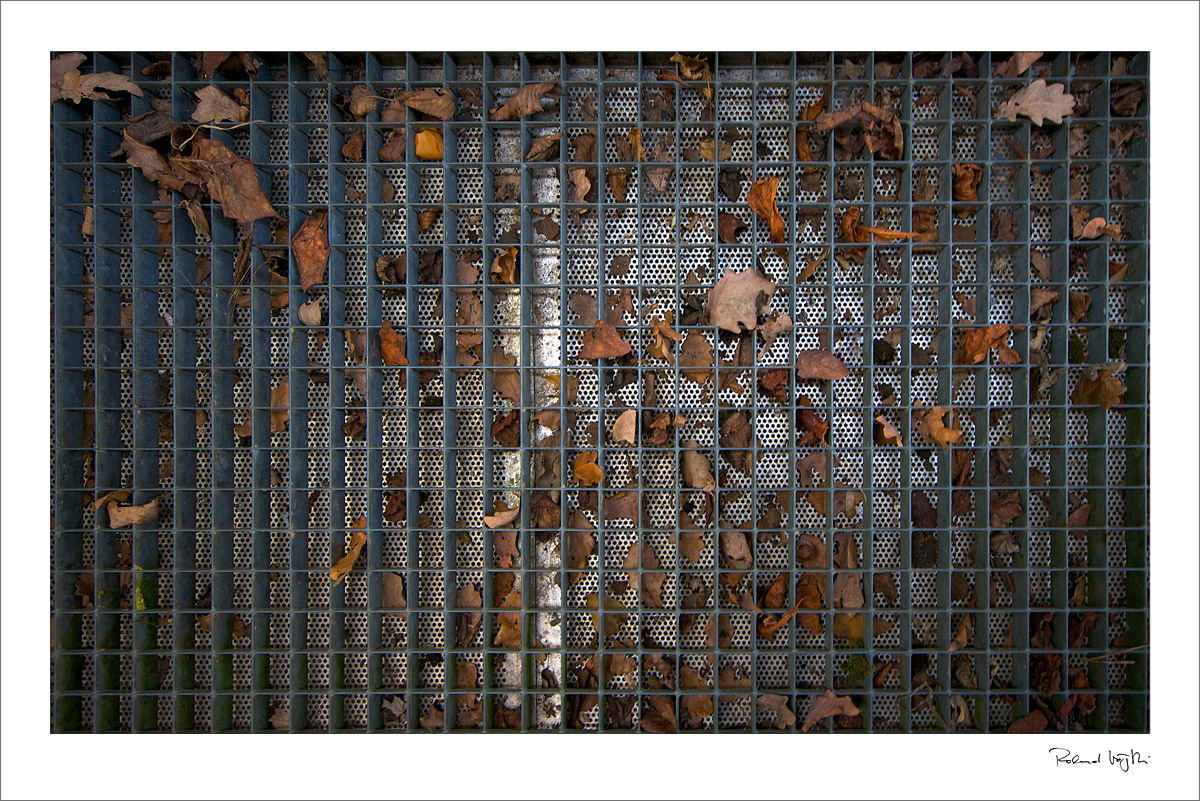


This is a brilliant example of “learning to see”. We tend to limit our vision to the ordinary. Few meters in front of us, sky and trees on the horizon, etc… and our eternal point of view is located about 1.5-2meters above the ground. Only by looking down, up, left, right, far, close and by moving out from this “eternal frames” we can learn to “see”.
Oh, absolutely, bambadi. We limit ourself to a very small fraction of what could be perceived. Even within the boundaries of our visual reception capabilities, we don’t see all.
In The Good Eye, we have a exercise which we call “What else”-exercise. You stand in front of something unspectacular/well known and look at it. And then you ask yourself “what else can I see beside what I saw in the first pass?” And you go on with that question for at least 20 iterations and still, you will be able to see still more and more… even after 100 iterations. That’s how limited we work with our senses.
cheers
®
“But, honestly, ain’t it a beauty?”
Oh, yes!
So rich in texture; pattern; and subtle hues. But above all, a feeling of transience — of time passing right beneath our feet.
Wirklich ein hervorrandes Beispiel zum Thema SEHEN. Ich bezweifele alllerdings, dass man SEHEN lernen kann. Das ERKENNEN als das Ergebnis vom SEHEN stellt eine noch grössere Herausforderung dar. Und hiermit beginnt die Welt der Fantasie. Denn was ich SEHE und ERKENNE ist die Realität, was ich daraus mache, bzw. wie ich das Erkannte darstelle, das ist ein Produkt meiner Fantasie und auch etwas meines Könnens.
Menschen ohne Fantasie werden keine Eindrücke vermitteln können. Sie sind blind.
Danke sehr, Reinhard. Du sprichst hier spannende Aspekte an. Nicht in allen Aussagen stimme ich mit dir überein. Was ich sehe und erkenne ist nur Teil der Realität und stets eine Vereinfachung, eine Weglassung, eine Fokussierung auf gewisse Aspekte. Andere Aspekte werden kontexspezifisch ignoriert. Das ist physiologisch auch gut so, sonst müsste unser Hirn um Faktoren grösser sein… WO ich ganz einig gehe mit dir ist, dass Menschen ohne Imaginationskraft in einer “sensuel ärmeren” Welt leben. Ihnen entgehen viele Momente der reinen Lust und Freude, weil sie Dinge auch dann nicht geniessen können, wenn man es ihnen zeigt. Ich glaube aber daran, dass man Kreativität fördern kann. Das ist auch eines der grossen Ziele von The Good Eye (www.goodeye.ch).
Ich freute mich über deine Gedanken hier!
cheers
®