Fünf Worte auf Rotem Holz
Warum diese Insel nach Tonkabohnen duftet
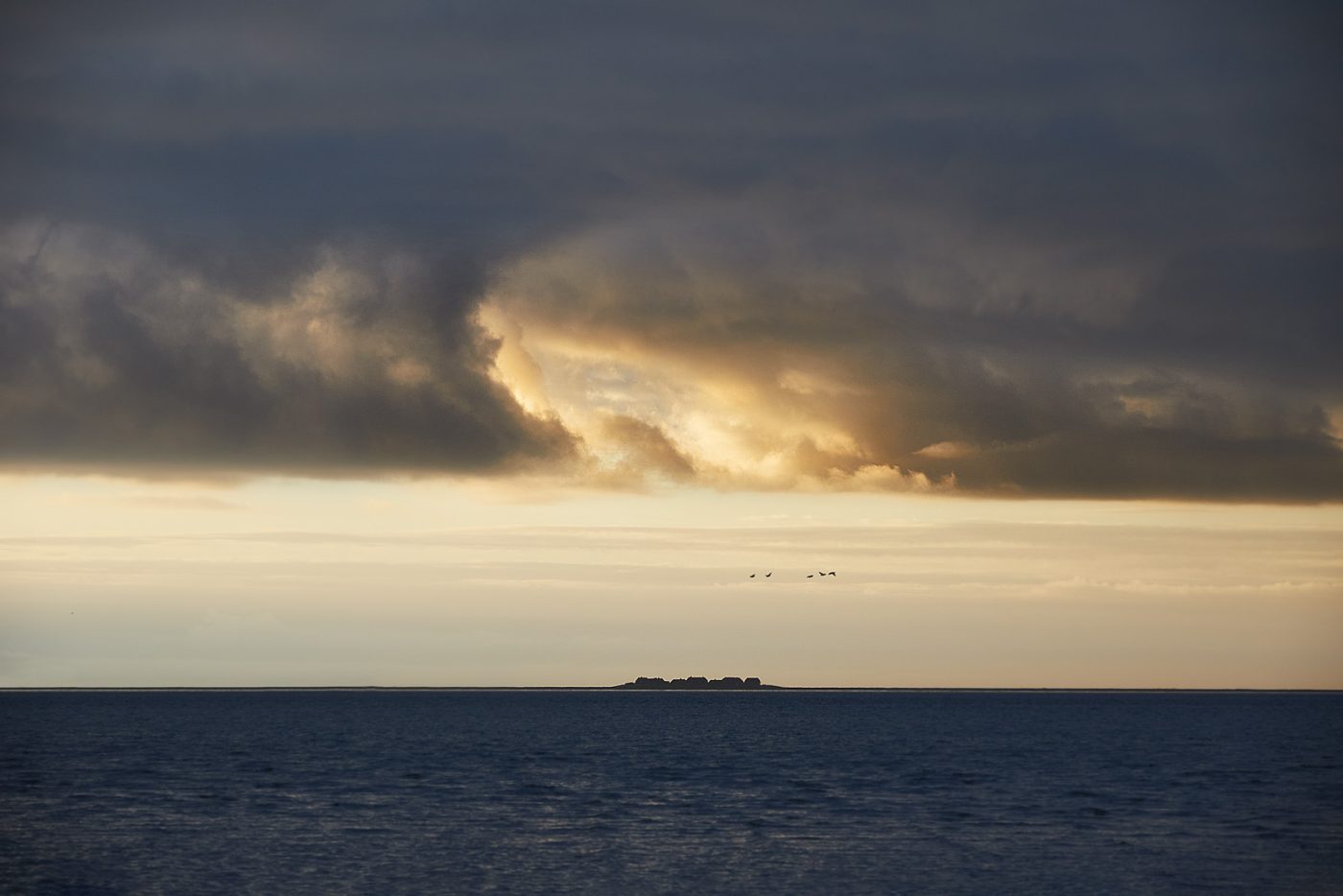
Die Dschunke liegt noch dort, wo die Flut sie zurückgelassen hat. Halb im Kies, halb im Tang, den roten Bauch dem Morgen zugewandt. Der Kapitän steht auf der Landzunge. Das Meer schweigt hinter ihm.
Er hebt das Gesicht in den Wind, obwohl keine Fahrt mehr ansteht. Er hat die Seeluft geatmet, lange genug, bis das Dröhnen der Stürme in seinem Herzen nachließ.
Und in dieser Ruhe weiss er, dass er auf dieser Insel nur eine Aufgabe hat. Die Dschunke könnte vielleicht noch schwimmen. Aber sie könnte ihn nicht mehr in jene Welt tragen, in der er Seebär gewesen war. Ihre Fahrt endet hier. Es gibt keinen Ruf mehr, der sie aufs Wasser lockt. So ist es an der Zeit, ihr einen Platz zu schaffen, an dem sie bleiben kann.
Als er die erste lange Planke aus dem Rumpf löst, bleibt ein warmer, dunkler Geruch in der Luft hängen. Salzwasser, altes Holz und ein betörender Duft, der nicht vom Meer allein gekommen sein kann.
Er beginnt am Bug. Dort, wo das Holz am meisten Salz getrunken hat. Seine Hände arbeiten behutsam. Jeden Nagel löst er sorgsam, als könnte ein zu rauer Griff noch einmal etwas verletzen. Die Planken geben nur widerstrebend nach. Manche knarren. Manche schweigen. Manche lösen sich mit einem tiefen Seufzen, in dem all ihre Fahrten noch einmal hörbar werden. Zögerlich beginnen sie, sich zu strecken.
An einem der roten Bretter hat das Salz den Lack gelöst. Unter seinen Fingern bricht er in feinen Schuppen auf. Einen Augenblick leuchten sie noch in seiner Hand, dann nimmt der Wind sie mit.
Jenes Holz, das den Mast getragen hat, legt er sorgsam beiseite.
Aus den ersten Planken setzt er eine Schwelle: breit genug, zwei Welten zu trennen, schmal genug für einen einzigen Schritt. Die Rippen des Rumpfes stellt er aufrecht in den Sand, eine nach der anderen, bis aus dem, was einmal Bauch gewesen war, langsam Wände werden.
Einige der roten Planken legt er über die aufgerichteten Rippen. Von Wind und Wellen gezeichnet, sind sie noch glatt genug, im Abendlicht die ans Ufer geworfenen Lichter zu tragen. Er baut einen Ort, der den Wind nicht verleugnet und ein Ankommen erlaubt.
Raum für Heimat.
Zwischen zwei Brettern bleibt eine schmale Fuge. Ein weißes Blütenblatt findet darin Halt. Vor die Schwelle legt er helle Kiesel vom Strand. Neben den Eingang stellt er eine flache Schale aus Stein. Als das Wasser darin still wird, spiegelt sich der Himmel. In einer Ecke bleiben einige Halme vom Strandgras liegen. Sie ergeben kein Nest. Aber sie wissen, wie Nester gemacht werden. In einer sanft gerundeten Nische bleibt das Abendlicht einen Augenblick länger. Dort legt er das Logbuch nieder. Eine Feder steckt zwischen den Seiten. Die Geschichte hat den Atem angehalten.
Am Abend röstet er Mandeln, bis ihr Duft den kleinen Raum füllt. Er kocht Porridge und reibt etwas Tonkabohne darüber. Die Wärme der Schale liegt in seinen Händen und er isst langsam, während der süße, dunkle Duft ins Holz zieht. Die leer gegessene Schale und den Löffel stellt er nebeneinander, sorgfältig, als würden sie dort noch lange gebraucht.
Draußen streicht der Wind um das Haus. Unter dem roten Dach ist nichts mehr heimatlos.
Alles ist an seinem Platz.
Er zieht die Jacke aus und legt sie neben sich. Das Salz hat den Stoff steif gemacht, die Schultern haben ihre Form darin zurückgelassen.
Auf die Jacke legt er das Hemd. Seine Hände wandern zärtlich und ohne Eile über den Stoff, verweilen an Schultern und Brust. Dann streicht er ihn glatt und legt die Ärmel ruhig an seine Seiten.
Er legt sich nackt daneben.
Unter dem roten Dach ist genug Platz für beide.
Eine Weile liegen sie so: der Mann und die Gestalt, in der er das Meer durchquert hatte.
Ein Körper, der sich in sich selbst nicht verstecken musste.
Eine Zärtlichkeit, die Antwort fand und in ihrem Echo weiterlebte.
Eine Haut, die wusste, wie es war, ersehnt zu sein.
Ein Denken, das in erwiderten Worten weiterreichte, als es allein je hätte gelangen können.
Eine Gestalt, die durch jene Welt erwachte, in der Atmen keinen Abstand mehr brauchte.
Nun sagt die Stille, wofür kein Satz groß genug gewesen wäre.
Neben ihm Jacke und Hemd.
So bleiben sie durch die Nacht.
✧
Der Morgen findet das Haus in tiefer Stille. Langsam löst sich die Dunkelheit aus dem Holz.
Der Mann richtet sich auf. Jacke und Hemd bleiben neben dem Logbuch liegen, so, wie er sie in der Nacht zur Ruhe gebettet hat.
Er lässt sie unberührt und zieht ein neues Hemd an.
Aus der Fuge löst er das weiße Blütenblatt. Doch kaum liegt es in seiner Hand, spürt er, dass er ihm kein Zuhause mehr sein kann. Vorsichtig schiebt er es zurück. Er schnürt ein kleines Bündel und nimmt nur mit, was kein früherer Name an sich zieht.
Dann zeichnet er in ein noch leeres Notizbuch die Umrisse der Insel und gibt ihr einen Namen.
Den Weg zur Insel wird er nicht vergessen.
Er tritt über die Schwelle hinaus und in der Schale vor der Tür liegt der Morgenhimmel.
Das beiseitegelegte Holz nimmt er in beide Hände. Einen Augenblick hält er es vor sich, als trüge es noch immer die ganze Höhe des Mastes. Dann hebt er es über den Eingang und gibt ihm dort seinen Platz.
Mit der Spitze seines Messers ritzt er die Worte in das Holz. Buchstabe für Buchstabe holt er sie aus dem behütetsten Ort in sich:
“Hier ruht ein geliebter Seebär.”
Er tritt einen Schritt zurück und liest die fünf Worte.
Langsam atmet er ein,
als müsste sein Körper noch einmal lernen,
dass die Luft auch ohne diesen Namen in ihn findet.
Dann dreht er sich dem Weitergehen zu.
Er lenkt seine Schritte über den Kies.
Zurück bleibt das Haus.
In seinem Holz die Dschunke.
Im Bauch der Dschunke ruht der Seebär.
Der Mann geht dorthin, wo niemand mehr auf diesen Namen antwortet.
Five Words on Red Wood
Why This Island Carries the Scent of Tonka Beans
The red junk still lies where the tide left her. Half in shingle, half in seaweed, her red belly turned toward morning. The captain stands on the headland. Behind him, the sea is silent.
He lifts his face into the wind, though no voyage lies ahead. He has breathed the sea air long enough for the thunder of the storms in his heart to subside.
And in that stillness, he knows there is only one thing left for him to do on this island. The junk might still float. But she could no longer carry him into that world in which he had been Sea Bear. Her voyage ends here. No call remains to draw her out onto the water. It is time to make a place for her where she can stay.
When he frees the first long plank from the hull, a warm, dark scent lingers in the air. Saltwater, old wood, and an intoxicating fragrance that could not have come from the sea alone.
He begins at the bow. There, where the timber has drunk deepest of the salt. His hands work gently. He eases each nail free with care, as though one rough touch might wound something all over again. The planks yield only reluctantly. Some creak. Some remain silent. Some come loose with a deep sigh in which all their voyages can be heard once more. Hesitantly, they begin to straighten.
On one of the red planks, the salt has loosened the paint. Under his fingers, it flakes into delicate scales. For a moment they still gleam in his palm, then the wind carries them away.
The wood that carried the mast he carefully sets aside.
From the first planks he shapes a threshold: wide enough to divide two worlds, narrow enough for a single step. One by one, he sets the ribs of the hull upright in the sand, until what had once been a belly slowly becomes walls.
He lays some of the red planks across the raised ribs. Marked by wind and waves, they are still smooth enough to carry, in the evening light, the glints the sea has thrown ashore. He builds a place that does not deny the wind and allows for arrival.
Room for home.
Between two boards, a narrow seam remains. A white petal finds its resting place there. Before the threshold, he lays pale pebbles from the shore. Beside the entrance, he sets down a shallow stone bowl. When the water grows still, the sky appears within it. In one corner, a few blades of beach grass are left lying. They do not form a nest. But they know how nests are made. In a softly rounded niche, the evening light lingers a little longer. There he lays down the logbook. A feather rests between its pages. The story holds its breath.
By evening, he roasts almonds until their scent fills the small room. He cooks porridge and grates a little tonka bean over it. The warmth of the bowl rests in his hands, and he eats slowly while the sweet, dark fragrance settles into the wood. He places the empty bowl and spoon side by side, carefully, as though they would still be needed for a long time.
Outside, the wind moves around the house. Beneath the red roof, nothing remains homeless.
Everything is in its place.
He takes off his jacket and lays it beside him. Salt has stiffened the cloth; his shoulders have left their shape in it.
Over the jacket, he lays the shirt. Tenderly, without haste, his hands travel across the fabric, lingering over the shoulders and chest. Then he smooths it flat and settles the sleeves quietly at its sides.
He lies down naked beside it.
Beneath the red roof, there is room enough for both.
For a while they lie like this: the man and the form in which he had crossed the sea.
A body that had not needed to hide within itself.
Tenderness that found an answer and lived on in its echo.
Skin that knew what it was to be longed for.
A mind that, in answering words, could reach farther than it ever could have alone.
A form that awoke through that world, where breathing no longer needed distance.
Now silence says what no sentence could have been large enough to hold.
Beside him, jacket and shirt.
So they remain through the night.
✧
Morning finds the house in deep silence. Slowly, the darkness loosens from the wood.
The man sits up. Jacket and shirt remain beside the logbook, just as he laid them to rest during the night.
He leaves them untouched and puts on a new shirt.
From the narrow seam, he eases the white petal free. Yet the moment it rests in his hand, he knows he can no longer be its home. Gently, he slips it back into place. He ties a small bundle and takes only what no former name can lay claim to.
Then, in a notebook still empty, he traces the outline of the island and gives it a name.
He will not forget the way to the island.
He steps beyond the threshold, and in the bowl outside lies the morning sky.
The wood he had set aside he takes in both hands. For a moment, he holds it before him, as though it still carried the full height of the mast. Then he lifts it above the entrance and gives it its place there.
With the point of his knife, he carves the words into the wood. Letter by letter, he draws them from the most carefully guarded place within him:
Here rests a beloved Sea Bear.
He takes one step back and reads the five words.
Slowly, he breathes in,
as though his body had to learn once more
that air can find its way into him without that name.
Then he turns toward going on.
He guides his steps across the shingle.
The house remains.
Within its wood, the junk.
Within the junk’s belly, Sea Bear rests.
The man goes where no one answers to that name anymore.
«» by Series/Category
«» By date
Share freely:

Discover more from Punctum Gallery Blog
Subscribe to get the latest posts sent to your email.